How to revise GCSE Maths effectively
A calmer, more purposeful approach to revision — beyond simply doing more questions.
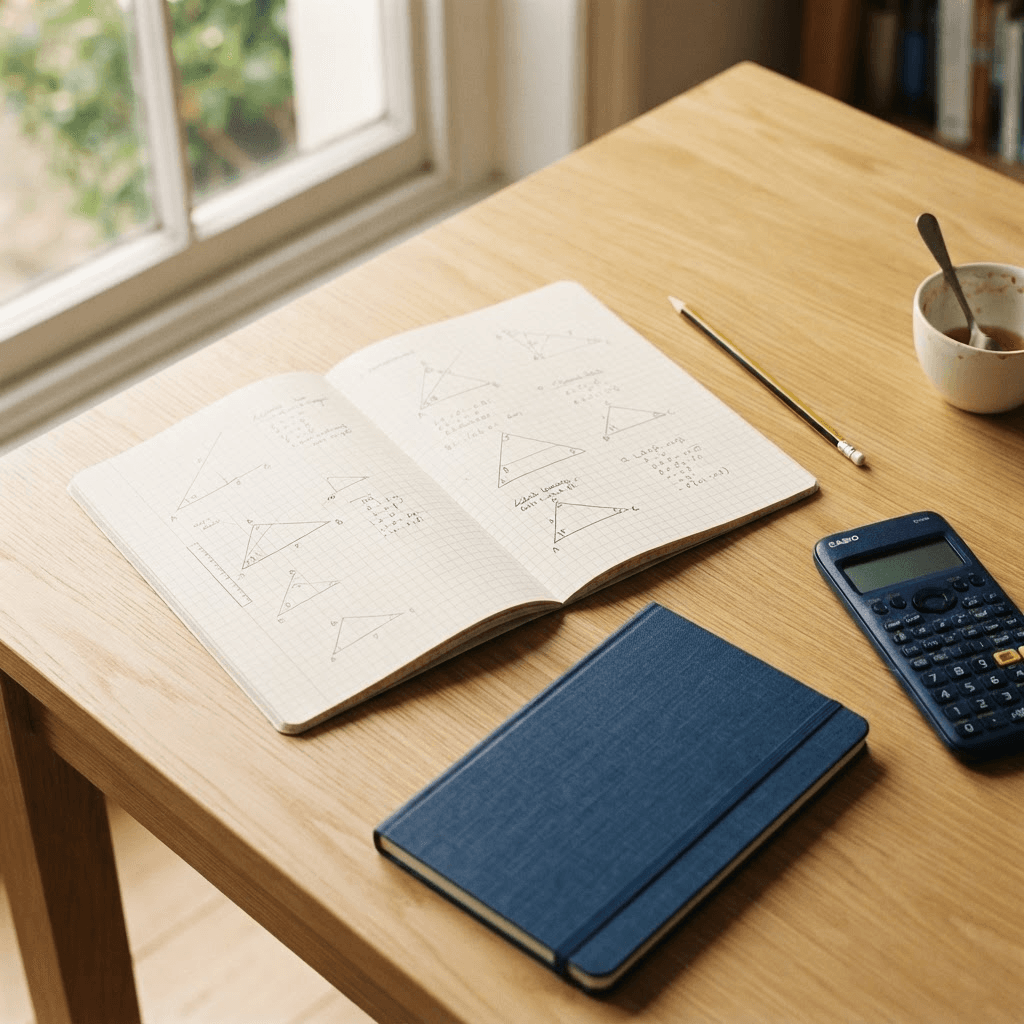
Start with what you understand now
Before planning another long revision session, take a short look at what you can already do. Use a topic list from your course or a few questions you have recently attempted. The aim is to identify a useful starting point, not to judge yourself.
Sort topics into three groups: comfortable, needs practice and not yet understood. If a question went wrong, ask why. A calculation slip needs a different response from not understanding the concept.
- Check the current specification and tier for your course.
- Keep a short list of topics to revisit.
- Choose one specific goal for each practice session.
Practise actively, then check your reasoning
Reading an explanation can make an idea look familiar without making it easy to use independently. After reviewing a method, close the example and try a similar question yourself.
Check your working as well as the final answer. If you needed to look at the solution, return to a related question later. That second attempt helps show whether the idea has become clearer.
Return to topics and mix your practice
After focused practice on one topic, return to it another day. As you become more comfortable, mix questions from different areas so that you also practise choosing a method.
Keep sessions realistic around your other subjects and commitments. A short, focused session that you can actually complete is more useful than an ambitious timetable you cannot maintain.
Use past papers with a purpose
Use papers that match your course and tier, and read the published instructions. First, you might work without time pressure to understand the questions. Later, timed practice can help you rehearse pacing.
Use the official mark scheme carefully and ask for help where the reasoning is unclear. Review patterns in your mistakes before starting another paper. More papers alone will not explain a concept you have not yet understood.